People often ask me the same question whenever I fly to Japan: “Are running shoes cheaper there?” I always give the same dramatic answer: Yes… and yes. Not a typo. Two yeses. Because there are actually two different reasons why your wallet somehow feels lighter at Narita Airport but heavier when you come home with a new pair of shoes.
The first “yes” is boring but powerful: currency. The Japanese yen has been unusually weak lately, and when you convert from stronger currencies like USD, Euro, or even rupiah, prices suddenly look friendlier. A shoe that feels “normal” in Tokyo can feel suspiciously cheap when you check the exchange rate. It’s like the entire country is quietly running a sale without putting up a sale sign.
But the second “yes” is the fun one — and this is where the real game begins. Japan is not just cheaper. Japan is discount heaven. If you know how to hunt, you don’t buy shoes there. You forage. You explore. You become a sneaker archaeologist digging through shelves and clearance corners.
The biggest mistake tourists make is going to Japan with tunnel vision. They want one specific shoe, one specific color, one specific model. That’s how you lose. My strategy is the opposite. Before flying, I make a small catalog: five to ten models I’d be happy to own. Not “must buy.” Just “would be nice.” That way, when I walk into a store, I’m flexible. I let the discount choose me, not the other way around.
Then comes the treasure hunt: ABC Mart, Alpen, Sports Depo, random outlet malls, and my personal favorite — hidden local shops like Sport Mitsuhashi in Gion. These places sometimes look ordinary outside, but inside you might find last season’s supershoe sitting quietly with a 40–50% discount like it committed a crime. In Japan, discounts are so polite they don’t even brag about themselves.
This strategy has already paid off for me more than once. A few years ago, I found the Adidas Adizero Boston for half the price compared to Indonesia. Same shoe, same tech, same fiberglass plate that tortures your feet during break-in, but half the price. I didn’t even hesitate. That pair went straight into my suitcase while my clothes had to negotiate for space.
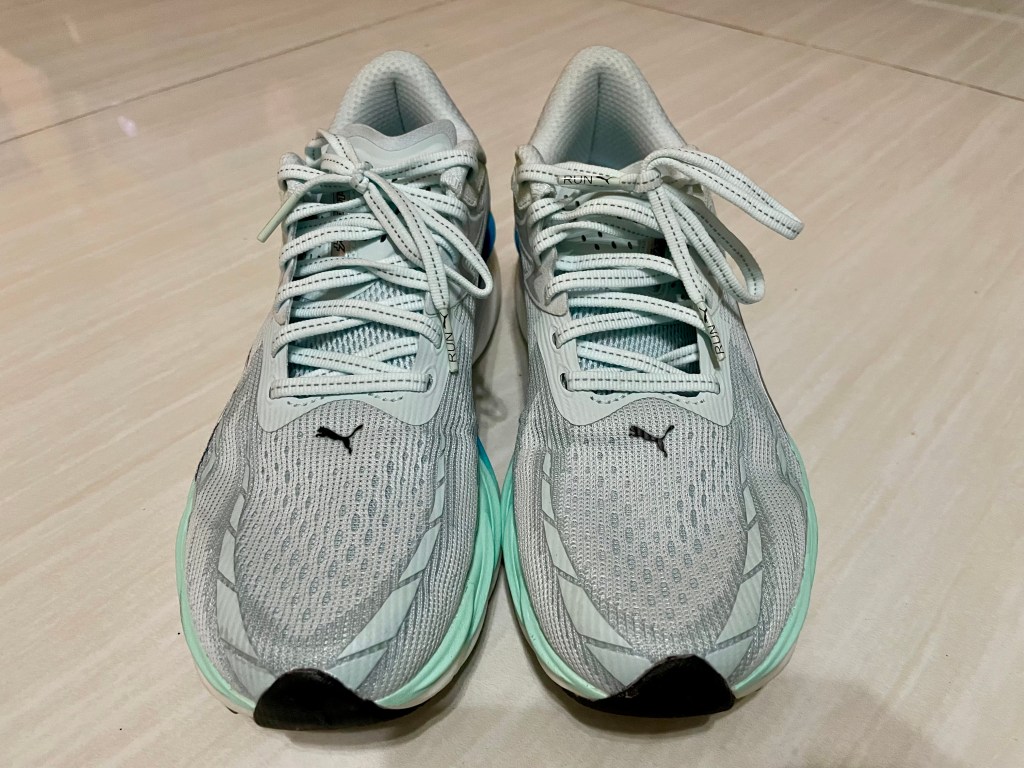
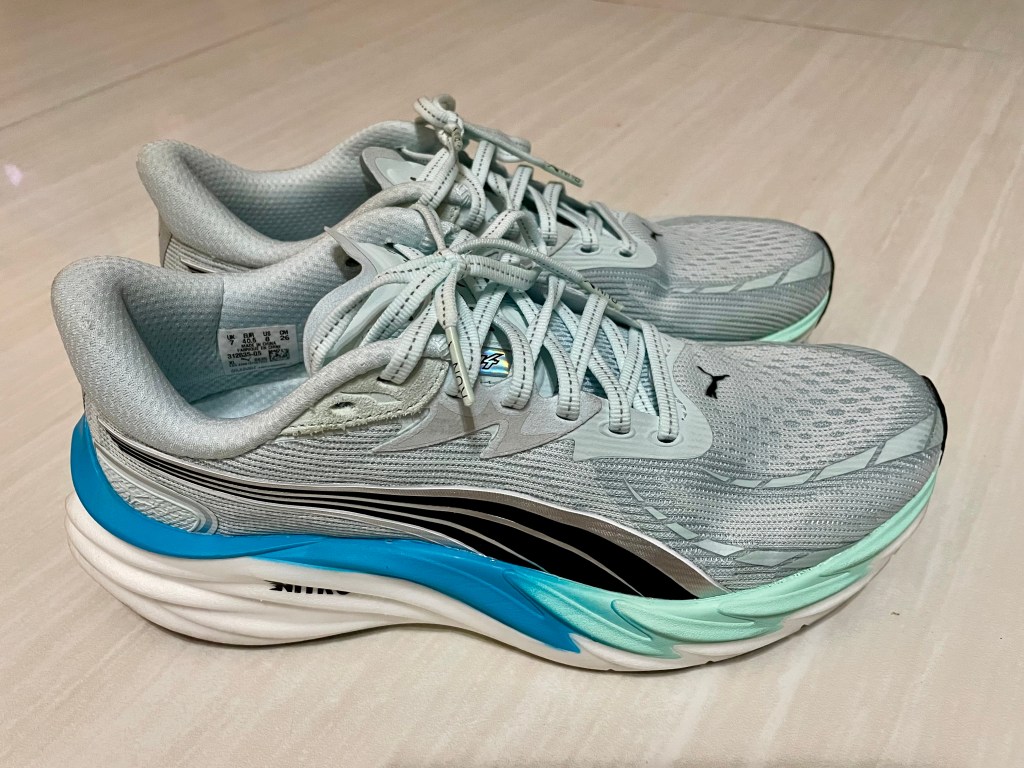
And recently, lightning struck twice. I found the Puma Velocity Nitro 4 for around 30% cheaper than back home. For a 5–10K daily trainer, it’s ridiculously good. The Nitro foam feels light and bouncy, and the PumaGrip outsole is basically made for Indonesia’s rainy season. From December to February, when the roads turn into an ice-skating rink, that grip sticks like gecko feet. It’s the kind of shoe that makes you feel brave enough to run when everyone else stays inside.
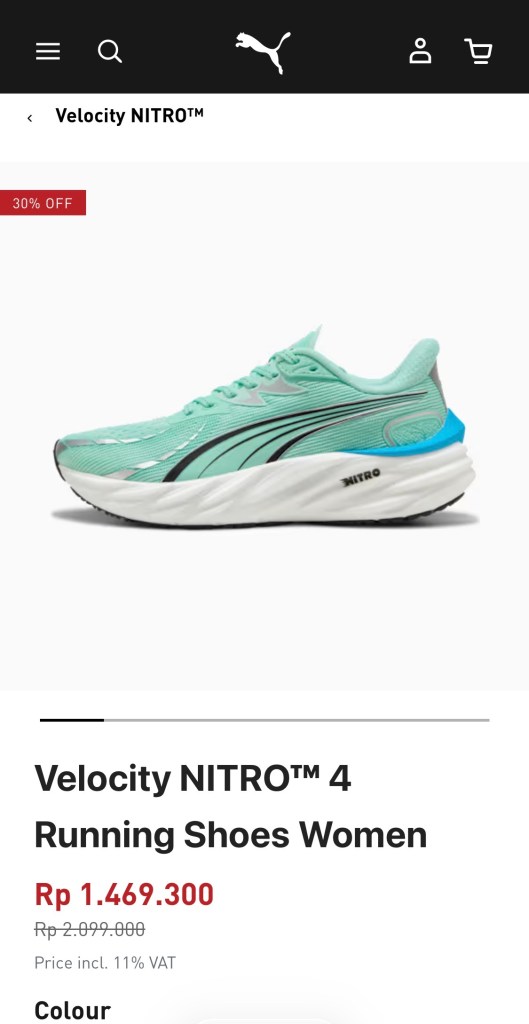
The funniest part? In Indonesia, this model costs around 14,000 yen equivalent. In Japan, I walked out paying about 9,000 yen. That’s not shopping — that’s daylight robbery, but legal. So yes, are running shoes cheaper in Japan? Yes because of the currency, and yes because of the discounts. Just don’t go there chasing one dream shoe. Go with an open mind, an empty suitcase, and the willingness to adopt whatever discounted pair chooses you. That’s how you win the Japanese running shoe lottery.
Of course, a cheap shoe is only a good deal if it’s actually good. Nobody wants to fly home proudly carrying a “discount trophy” that ends up becoming a walking shoe two weeks later. Luckily, the Velocity Nitro 4 turned out to be more than just a lucky price tag. From the first run, it felt friendly and uncomplicated — not one of those dramatic supershoes that demand perfect form and Olympic-level calves. It’s simply light, balanced, and fun. The Nitro foam midsole has that soft-but-snappy bounce that makes easy runs feel easier and tempo runs feel surprisingly natural, like the shoe is gently nudging you forward instead of forcing you.
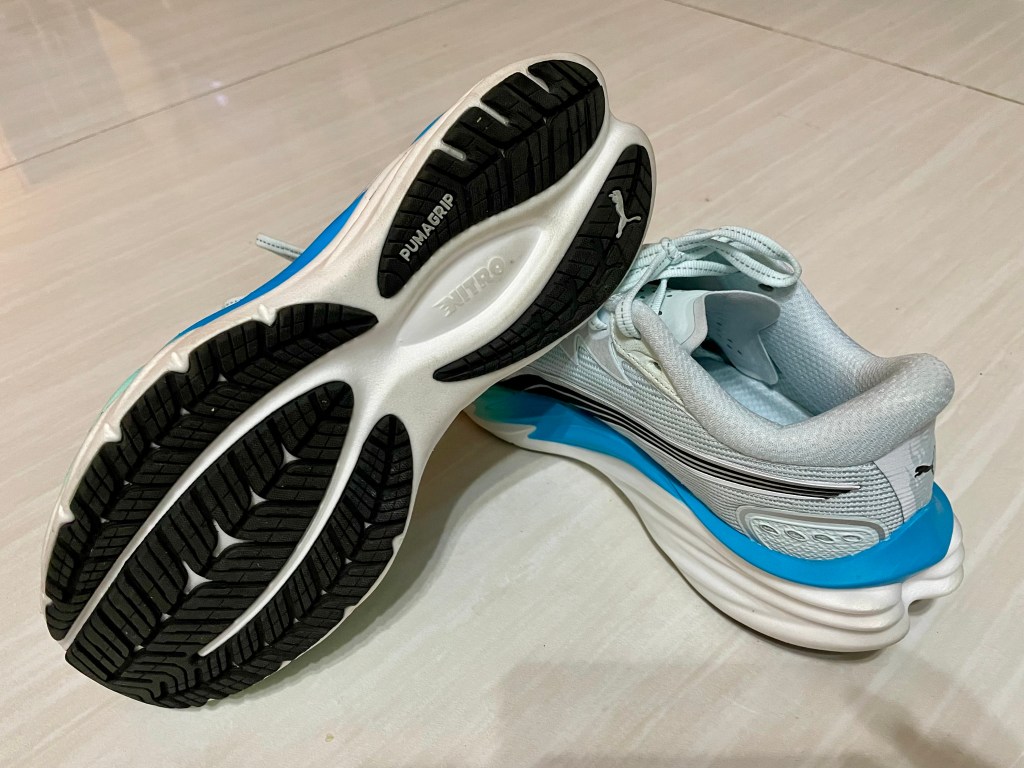
What surprised me most, though, was the grip. If you live in Indonesia, you know our rainy season turns roads into accidental ice rinks. Painted lines become death traps. Corners become trust exercises. But the PumaGrip outsole is ridiculously reliable. On wet asphalt and damp sidewalks, it sticks like glue. I didn’t have to slow down or run like a scared cat avoiding puddles. For once, I could just focus on my pace instead of worrying about slipping and becoming an unexpected YouTube fail video.
Comfort-wise, it checks all the right boxes too. The upper is breathable and secure without squeezing your toes, and the padding around the heel and tongue feels just right — not overly thick, not minimalist torture. It’s the kind of shoe you forget about mid-run, which is probably the highest compliment a daily trainer can get. Maybe it’s not a carbon-plated superstar or a flashy race-day monster, but for 5K to 10K runs, it’s dependable, cheerful, and honest. And honestly, at 9,000 yen in Japan instead of 14,000 yen back home, it might be the most satisfying “souvenir” I’ve ever brought home.

 Rundefeated
Leave a comment